Warning: Spoilers ahead
The devastating, gruesome, and wretched sensation that is BBC’s adaptation of “Dracula,” released January 1st, is the reality that they only aired three 90 minute episodes on Netflix. Coming to terms as an audience that there would be no more wicked banter to indulge in between Dracula and a refreshing Van Helsing is a thirsty feeling that can only be compared to that of a fixated bride, tired of suckling on rats and being left hungry for more. Van Helsing’s wit and unflinching determination to not only bring him down, but to understand him parallels a relationship quite similar to Joker and Batman’s, another fan favorite twisted duo in pop culture. She brings out the human in him, both literally and figuratively (one of the best moments in the series is Dracula’s infamous wolf transformation).
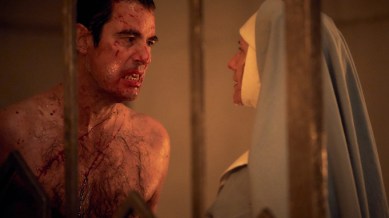
Many versions of Bram Stoker’s 1897 novel have been created for the big screen, some quite frankly just a regurgitation of the last. However, not many have come close to matching the poetic brilliance and fine balance between literary horror and Gothic romance of Francis Ford Coppola’s 1992 interpretation. A personal favorite, I was initially quick to dismiss Claes Bang as a challenging and worthy successor to Gary Oldman, however he does a phenomenal job being our generation’s Dracul. As for the show’s consistent bloodshed, The Count does not fail to remind us that he was a warlord first and foremost before he was a bloodthirsty vampire. Claes Bang’s Dracula holds true to that identity and draws the fine line to differentiate between his character and Oldman’s love-driven desperation through sophisticated sarcasm and raw bloodlust. Here, Dracula does bad things and kills people because he is evil, not in love. He is a hungry beast and enjoys the hunt.
Considering that the series was brought to us by the creators of BBC’s “Sherlock,” Steven Moffatt and Mark Gatiss, there were many general assumptions viewers could have expected in the style and structure of the production. Yet, a lot of viewers still seemed surprised with the direction the creators took with the series. Despite a generally mixed reaction, it appears that there is a possibility of a second season for the show, which would be interesting to see. As already mentioned, this adaption is a fine sticky mix of different and refreshing, so to not be harsh and condemning to something different is understandably a challenge for a generation so used to strategically making decisions by swiping left or right… as the show itself satirizes. RIP Lucy.
Yes, the ending was shocking and disheveling. It left viewers more bewildered and uncomfortable than satisfied, which I don’t have a problem with. For a first season and a creative experiment by a team that chose to reinvent a classic, unsettled questions and hovering hypotheticals allow room for our own discussions and answers. It contributes to the lore of a legendary monster and gives the creators the option to expand into further storytelling that can be explored with a second season if we’re lucky.
From the acting, the writing, the production, to the costumes, I’m in awe with such an interesting take to Bram Stoker’s story and give kudos to the entire crew involved. I am also looking forward to seeing Claes Bang on the screen again as his performance alone could have had me binge watching like a creature of the night. Take the love for horror and Dracula’s presence in pop culture since the novel’s creation in 1897 to the illegitimate release of Nosferatu in 1922 and finally to the present day of 2020, BBC provided us with a great re-imagined interpretation that stays loyal to fans of the original while also offering us a contemporary version of our favorite Transylvanian super-villain.
Of course there must be some respects paid to the previous classic takes on Dracula – some subtle costume emblems and must-have one-liners from its predecessors, which they do include. It is necessary to maintain some of that nostalgia for horror fans who have followed all the content related to Dracula over the years so religiously, pun intended. That brings us to the next point and to the conclusion of episode three, the driving mission for Sister Agatha to unveil: why does Dracula fear the cross? As the show climaxes into exposing Dracula as a surprisingly fragile and shameful being who surrenders to sunlight and must face his fear of death, a very human fear, it bares the question: is Dracula like us? Is he a figure we relate to? Sympathize with? Time and time again, we see portrayals of Dracula as The Devil himself whereas through this adaptation, he’s a devil with demons of his own.

 SAM VILLALOBOS
Leave a comment