Pop culture develops as a consensus of society driven by a unity of ideas that are reactions to previous statements in pop culture. Pop culture is not something that is static but rather constantly shaped and remolded to fit the tone of the current state in society. One example of this are music movements.
Individuality and identity are two of the most common themes to persist themselves in music movements in general, but folk music in particular. Every genre of music revolutionizes with a movement, representation, and culture. Genres are born out of dynamic issues like race and gender in which I will explore through the wider lens of identity and see how freedom and novelty is always solicited by the youth culture – no matter the era, there is always a counter-culture. As I analyze the musical and social influences of rockabilly, we will see that this was just that to western swing and country, a counter-culture. I want to dissect the cross-cultural and countercultural differences that problematize racial, generic, and intergenerational aspects of this music. Rockabilly was the rebellious rock & rollin’ spawn of country music and these folk musicians and innovators continue to prove their fluidity in the possibilities and extent to which these sounds can roam.
According to a book titled, Go Cat Go! Rockabilly Music And Its Makers, by Craig Morrison, rockabilly is a type of rock ‘n’ roll, specifically an emotionally intense blend of country music (amongst other white traditions) and rhythm and blues (as well as other black traditions) (ix). So, by means of partly culturally appropriating black music, this exciting fusion first became popular some time in the 1950s among white musicians from the mid-southern part of the United States when a wild abandon of the older crowd’s social norms and values occurred. This clarifies the term and where it derived from. A combination of ‘rock ‘n’ roll’ and ‘hillbilly’, rockabilly music is characterized by assertive and confident singing, moderately fast tempos, and small ensembles consisting of three to six members using blues and blues-derived forms. Common themes in the lyrics reside with fast living, cars, parties, unusual characters, heterosexual relationships, and teenage fashions and frustrations. It is also very common for there to be dominant echo and reverb effects to enhance most recordings as well as slapback styles, which were very popular in the 1950s, coated by an obvious Elvis Presley influence (Morrison 1).
These assertions molded a great sense of individualism for many cultural groups from all sorts of backgrounds and helped bring their racial and sexual issues into the mainstream by popularizing them into a non-commercial, juvenile format that replaced dominant restrictive values with exuberantly progressive ideals.
Drawing specifically from western swing and honky tonk, these performers crossed heavy country and R&B inflections with blues structures and strong rhythm and beat. Ignoring the conventions of this time, these musicians carried a wild and extreme vocal style that ultimately represented their abandon of society’s standards and the replacement of confinement with the freedom to be whatever they wanted to be, thus taking society’s disapproval and reshaping it into reassurance. Just take a listen to “Goddamn Rock ‘N’ Roll” by The Cramps from their 1990 album, “Stay Sick!” where the renowned raw rockabilly emotion and lawlessness reach an improvisatory and declarative level with Lux Interior’s howls and growls in his proclamation, “I dig that goddamn Rock ‘n’ Roll. That kinda stuff that don’t save souls.”
Energetic, upfront, blues-influenced electric guitar solos and riffs are also prominent qualities among many modern rockabilly artists like The Cramps but also classic rockabilly godfathers such as Roy Orbison with “Pretty Woman”, Chuck Berry’s “Johnny B. Goode”, or Gene Vincent’s “Be-Bop-A-Lula.” Some modern rockabilly bands, like the Danish punk band, The Horrorpops, or American musician, Reverend Horton Heat, simultaneously sustain a unique deviation from popular music and a variation in rockabilly style by displaying more of an inclination towards a more traditional string band sound with an upright bass, all while still customizing their playing technique to a modern slapped method combining tradition with a punk aesthetic. Therefore, it can be assumed that identity is a principal motivator for rockabilly musicians to distinguish themselves from each other and for rockabilly’s characteristics of improvisation and customization. This customization can be derived from borrowing from musical methods from the past and combining them with new ideas, shedding light on two issues discussed throughout the course, that is the idea that popular culture feeds itself the past by means of sampling and appropriating.
In the book titled, Sexing The Groove: Popular Music and Gender, there is an article titled “Can A Fujiyama Mama Be The Female Elvis? the Wild, Wild women of rockabilly”, in which David Sanjek states that both the men and women who created rockabilly music and performed rockabilly participated in the confiscation of cultural space and power from the dominant society by resisting incorporation into that society and instead proudly appropriating the opposed, improper, and socially unaccepted forms of society (139). This reintroduced Visconti et al.’s idea of space and place in popular culture and what that means to individuals, but more particularly a shared place in music, in this case the genre of rockabilly serving as the identifiable place with a rebellious meaning (525). This place, rockabilly culture, born out of multiple factors in a space derived from country and folk traditions, holds a self-identifying meaning for individuals that dismiss cultural and social expectations. By moving towards the new and celebrating freedom, boys were men and men were boys while women attained a newly found expressive liberation. Rockabilly artists crossed racial and generic boundaries and it is particularly interesting that many of these female singers were the honky tonk singers of the late 40s and early 50s.
Comparing her 1954 recording of “You Can’t Have My Love” featuring Billy Gray to her 1957 release, “Fujiyama Mama,” Wanda Jackson displayed a new kind of agency in her gender and sexuality as a woman, eradicating the forces of male-centred social and musical hegemony. Later in her career, her song “Honey Bop,” released in 1958, captured rockabilly’s disobedient agenda against the mainstream pretty well with lyrics like, “Well the waltz is for the square and the rhumba is too old – Baby, we’re just rockin’ let it satisfy your soul,” and describing its listeners as if they were “in a trance.”
Evidently, women in rockabilly music were “counter-irritants”, a term Sanjek borrowed from Marshall McLuhan, to the social consensus of the 1950s, much like African-American females were in the 1920s with blues music (140). They too contested the male hegemony of the musical and social domain and clutched an identity of a sexy and most importantly, sexual, female being. For that reason, rockabilly and women in rockabilly in a sense are just continuities of what some women were already doing with reclaiming their sexuality through music, including country, with artists such as Patsy Montana, whose hit single, “I Want To Be A Cowboy’s Sweetheart,” placed her as one of the first popular female artists in country music. Released in the 1930s, her song and outward appearance actually reflected more of her desire to be a cowboy rather than to simply idly exist by one. From the 1950s onward, other women took more specific and political issues against gender norms head-on, and very much ahead of its time for a genre that began so constrictive. Artists like Loretta Lynn and Kitty Wells challenged the conformative binary of femininity and masculinity with songs such as, “The Pill” and “It Wasn’t God Who Made Honky Tonk Angels,” respectively.
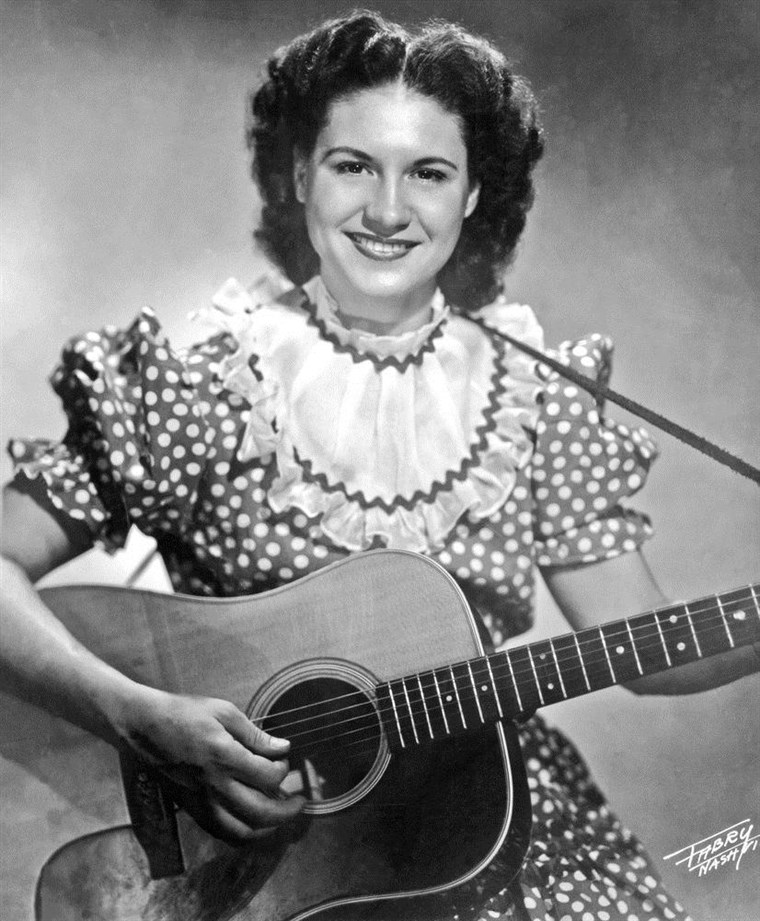
Rockabilly, much like hip-hop and many other genres, is a movement and a culture, rather than just a musical genre. Much like a rapper or heavy metal artist, a rockabilly performer’s commitment and authenticity is calculated and scrutinized by their fashion and style; in their case, by their greased hair, sideburns, vintage style, vintage clothes, vintage instruments and more; a heavy focus lied on their outside demeanor. Tricia Rose in her article titled, “A Style Nobody Can Deal With: Politics, Style and the Postindustrial City in Hip Hop,” describes this “cultural expression” as the need to develop new fashions, trademarks in a sense, because “style can be used as a gesture of refusal, or as a form of oblique challenge to structures of domination” (409). Fashion serves as a marker of identity formation and cultural expression that can be used as a signifier to differentiate between us and the other. Like in many musics, there is a certain ‘street rep’ that an artist must consider captivating in their persona outside of their music in order to be credible songwriters and musicians. They need to essentially be their music. Therefore, they had to be rockabillies and identify as such, on and off the stage.
According to the documentary, Tear it up!, produced and directed by Greg Wolske, as the popularity of rockabilly grew, the sound expanded to other parts of the country, most notably the West Coast. Urban musicians who knew nothing of the South began to create rockabilly music for themselves as they identified with the rockabilly attitude – a conception of music that is reminiscent to Stephen Foster. Artists like Ricky Nelson, Eddie Cochran, Bill Haley, and Bob Luman, who were inspired by these mid-southern musicians, apprehended the rockabilly identity.
Unfortunately, the influence of the style declined in the 60s and looking at the social reasons behind that, we find that current events and historical influences, such as the Vietnam War, drew a different kind of demand from popular audiences, as anti-war anthems and a much softer sound, much more appropriate sound one could say, dominated the popular culture to reflect the current mood. Artists like Pete Seeger and Johnny Horton created folk ballads to soothe and calm their listeners through the troubled times. This was what the population demanded their popular music to be at this time, orderly and socially cohesive. It converted back to a homogenized and politically pleasing sound, for parents in particular, who so wholeheartedly disapproved of the ‘black’ music being listened and danced to by their teenagers.
All of this led to a hasty reestablishment of control over the music by record industry leaders and conservatives who cherished their order and propriety. However, in its return during the 1970s, rockabilly impacted the creation of new styles in manners way ahead of its time, with bands such as The Stray Cats from New York and The Cramps from California. This revival influenced many subcultures, popular genres, and a spectrum of identities like punk rock, the feminist sub-genre movement Riot Grrrl, as well as “psychobilly”, a term brought to you by the promotional flyers of The Cramps’ garage shows who drew heavy inspiration from Johnny Cash and one song in particular titled, “One Piece At A Time”, that includes a “psycho-billy Cadillac” in its lyrics. As a result, this serves as a great example demonstrating that the taking of country music and outlaw music while morphing it into customized interpretations contributed to this theme of self-identity and the individualistic characteristic continuously found in popular genres like rock ‘n’ roll, folk, and hip-hop, which actually began as a genre solely based on the art of sampling.
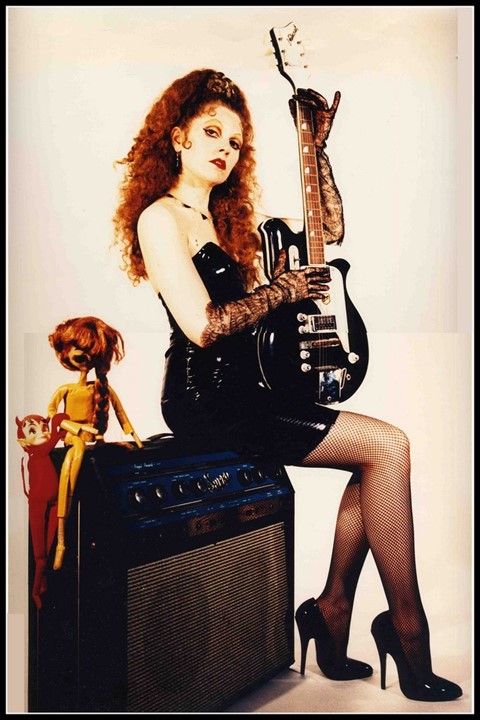
In addition to country, the practice of songs orally and aurally being transmitted on and on with room for improvisation, interpretation, and alteration is ever present among all variations of genre styles and between generations, old and new. It is a phenomenon present amongst various art forms in popular culture, however, it is most noticeably represented in music. The notion that identity and individuality is attainable by any creative mind longing for something different out of what is currently presented supports and reinforces our understanding of pop culture and the idea that it feeds itself the past as it is captured in music through the practice of sampling.
As aforementioned, once rockabilly returned into the popular scene once again as a social counter-irritant in music, it led to impactful sub-genres that took a stronger stance on political and social issues in the history of music, such as punk. Within this genre, more influential for the advancement of gender equality and for pushing boundaries within gender was the Riot Grrrl movement. Women were present in punk rock at the start of the music, and were essential members in some of the most influential bands, but much like in most genres, female singers were typically more vocal than their male counterparts on issues of identity, gender, and sexuality. Thus, this feminist sub-genre of punk, known as Riot Grrrl, became one of the most iconic safe spaces for women to express themselves, perform gender, and escape the labeling and categorization their identities were bound to by the social norms imposed by society.
Bands such as Bikini Kill and Bratmobile that were very outspoken evolved women’s agency in society, a self-reclamation that had once began with rockabilly, by taking the act even further towards a more hardcore feminism aimed at complete female liberation. With the concepts of gender and sex being more and more understood as performative categories, this too became transparent in their live performances and alluded to even greater movements that would take place for music within gender and performance.
As Judith Butler describes the body as “shaped by political forces with strategic interests in keeping that body bounded and constituted by the markers of sex,” gender identity came to be understood as a fluid spectrum influenced by a number of cultural factors outside sex (175). Performativity is the philosophy that the act of speech is something you can construct, like identity. A person is not born anything except for a person and the categories of all these things are all performed. Therefore, original identity after which gender fashions itself is an imitation without an origin.
What was first a newfound sexual freedom in rockabilly music in the 1950s became a freedom from sex by women in the early 1990s that changed heteronormative stereotypes and challenged both femininity and masculinity leading to more gender fluidity, the performance of androgyny, and lowered the boundaries to which genders were construed against. More and more femmes defied social and cultural norms that depicted women in traditional roles in society and in music evoking rebellious, non-conformist tones in music and performance by means of reappropriation. Spaces focusing on true self-expression, authenticity, and gender-neutral music scenes slowly became the focus late into the 90s. This transgressive femininity continues to emerge into our consumption of popular culture with themes of social alienation, confinement, and a desire for freedom.

Tradition and the creation of new music go together and are not mutually exclusive, but rather when combined create a tug-of-war of artistry that blends together beautifully when contending generations and cultures meet at a half point with their creativity. Then, the final result, whatever it may be awaits for the next group to revise and transform it creating something with their own experiences and ideas to identify with. Since that is after all how identities are shaped to begin with, variations in experiences and ideas, focusing on the individuality of a person rather than mere innate factors like biology. That same fluidity that applies to art and how it exists and is reshaped can also apply to how gender identities function.
Taking into account a person’s intersectionality of identities, it is an ongoing process of transformation and procreation of unique music that will suit somebody in particular momentarily before being reshaped into another identifiable popular music. That is why I would presume that people turn to music when seeking out a safe space and a way for self-expression; I would also stress the idea of sampling, the art of appropriating something to suit one’s needs since popular culture is just that, a reaction, an interaction rather between multiple pieces of art responding to one another. That is the beauty of music and representation – if it doesn’t meet our own thoughts and values, we can challenge ourselves by exploring and reinventing the music that does.
Some aspects of gender and style I personally found very insightful to my very miniscule knowledge about American country music prior to my research, and to particular social aspects of my life, I found that being socially conscious and aware of cultural and historical developments of popular music styles such as folk music is extremely important, especially for someone with career goals to work in radio and the music industry, like myself. Having no prior experience or real exposure to it, I ignorantly had presumed folk music into being one formulaic genre, primarily produced and heard by white men. I later found that while in most of its history, that is partly true, despite having to really search for it, folk and country music did indeed have some minority representation and were amongst some of the most innovative and varying genre styles I have ever heard now that I can identify it.
Before my research, country music didn’t appeal to me due to the lack of popular female artists in its male-dominated industry that so heavily carries out masculine values and heteronormative romanticism in its style. And though female musicians have somehow managed to make a crack in the music industry’s glass ceiling, it is still my opinion that women in country among other atypical genres in music remain very underrepresented in its mainstream popular culture. Now, however, I am able to walk away with much more relatable country idols such as Patsy Montana, Kitty Wells, and Loretta Lynn. I was relieved to see that a form of feminism did arise in country, what I had presumed to be a very conservative and conforming musical demonstration, when in fact it is because of these few country artists that played the role as catalysts that we got rockabilly feminists like Wanda Jackson and Poison Ivy.
Conclusively, I admire folk music for its roots in what marks the starting point for popular music in America and all that it it influenced thereafter. I also appreciate its plentiful and creative flexibility to inspire other sub-cultures and sub-genres that produced many of my own favorite musical styles and artists like The Devil Makes Three, Creedence Clearwater Revival, Johnny Cash, Bob Dylan, Neil Young, and most uniquely punk, The Cramps. Consequently, it became evident to me that I participated in folk music without even knowing it. This is important in our present-day society as we consume pop culture and continue to learn and expose ourselves to new ideas and cultures while understanding that music is susceptible to indigenization, commodification and of course to influence from the past. We can always personalize it and immerse ourselves into the music until we achieve that feeling of identity and autonomy in calling it our own, which is what occurred with folk and country’s counter offspring, rockabilly.
Bibliography
Butler, Judith. “Bodily Inscriptions, Performative Subversion.” Gender Trouble. New York: Routledge, 1990. 175-193.
Morrison, Craig. Go Cat Go!: Rockabilly Music and Its Makers. Urbana and Chicago: University of Illinois Press, 1996. Ix-368.
Rose, Tricia. “A Style Nobody Can Deal With: Politics, Style and the Postindustrial City in Hip Hop.” Microphone Fiends: Youth Music and Youth Culture. Ed. Andrew Ross and Tricia Rose. New York: Routledge, 1994. 401-415.
Sanjek, David. “Can a Fujiyama Mama Be the Female Elvis?: The Wild, Wild Women of Rockabilly.” Sexing the Groove. Ed. Sheila Whiteley. New York: Routledge, 1997. 137-167.
Visconti, Luca M. et al., “Street Art, Sweet Art? Reclaiming the “Public” Public Place,” Journal of Consumer Research 37.3, 2010. 511-529.
Wolske, Greg. “What Is Rockabilly? Tear It Up! The Rockabilly Documentary.” What Is Rockabilly? Tear It Up! The Rockabilly Documentary. Lasso Production, 1990. Web. 22 Nov. 2016. <http://www.tearitup.com/Rockabilly.htm>.
 SAM VILLALOBOS
Leave a comment